
.png&w=3840&q=75&dpl=dpl_4Wup3zkS1rVKZm2wSEHHNvtuvYn7)
Suicidal Thoughts
Suicidal thoughts are a sign of unbearable pain, not a character flaw, and not the truth about your worth.
If you are thinking about suicide right now, please call or text 988 (US) or call 14416 — Tele-MANAS (India) — or contact your local emergency number. You don't have to face this moment alone.

Thinking about suicide doesn't mean you actually want to die. Often it means you want the pain to stop, and in that moment it's hard to see any other way out. These thoughts can come from depression, trauma, addiction, grief, exhaustion, or a combination that's built up over time.
Having a thought isn't the same as having a plan, and having a plan isn't the same as acting on it. Wherever you are in this process, it's important to talk to someone—not to dismiss your pain, but to share the burden. Suicidal crises are usually temporary, even if the pain feels endless. Most people who seek help during a crisis are grateful to be alive afterward. The urge to end it will pass; the goal is to stay safe until it does.




Talking about wanting to die, disappear, or not exist
Giving away belongings or tying up loose ends
Feeling like a burden to family, friends, or a faith community
A sudden sense of calm or relief after a period of deep depression
Withdrawing from people, canceling plans, going quiet after being talkative
Increased use of alcohol or drugs to cope
Saying goodbye in ways that feel final

.png&w=256&q=75&dpl=dpl_4Wup3zkS1rVKZm2wSEHHNvtuvYn7)
.png&w=3840&q=75&dpl=dpl_4Wup3zkS1rVKZm2wSEHHNvtuvYn7)
WHAT FAITH SAYS
Psalm 6:2-3
Scripture doesn't flinch from this kind of despair. Job cursed the day he was born and Jonah asked God to let him die. Elijah did too. These weren't sidebars in their stories — God met each of them in that exact place, without rushing them past it.
Scripture describes God's posture toward the suffering as one of nearness, not distance, and mercy, not condemnation. You are not disqualified from grace by the depth of your pain.
It’s frequently linked to untreated depression, and substances are sometimes used to numb thoughts that feel too loud to sit with sober — which can lower inhibition and make acting on those thoughts more likely rather than less.
If this is you, you may be dealing with more than one thing at once — and that’s common, not a sign you’re uniquely broken. Treating them together, rather than in isolation, tends to work best.



.png&w=3840&q=75&dpl=dpl_4Wup3zkS1rVKZm2wSEHHNvtuvYn7)
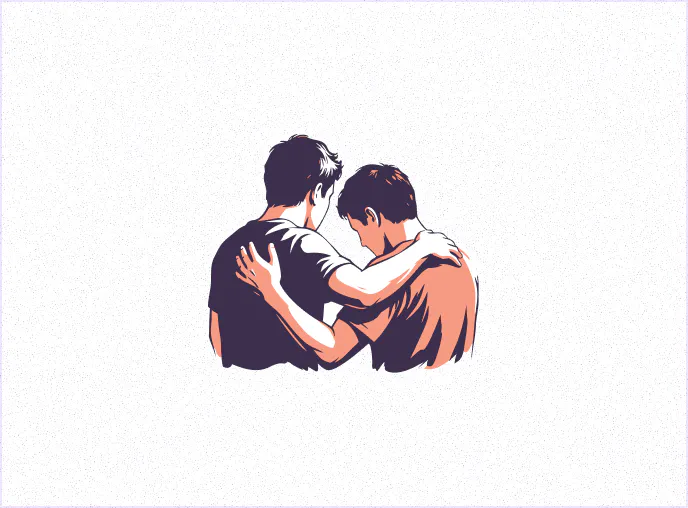
Silence is what keeps a crisis dangerous. You don't need the perfect words — "I'm not okay and I'm scared" is enough. A friend, family member, pastor, or the Hope Agent can be that first person.

A safety plan is a simple, written list of warning signs, coping steps, people to call, and ways to make your environment safer. A counselor, therapist, or crisis line can help you build one in minutes.
The 988 Suicide & Crisis Lifeline (US) and Tele-MANAS (India, 14416 or 1-800-891-4416) provide free, confidential support 24/7 by phone.
Suicidal thoughts are treatable. Therapy, psychiatric care, and — where needed — inpatient support exist specifically for this, and reaching for them is a sign of strength, not failure.

If you have access to medication, firearms, or anything that could harm you, creating distance from them — even by asking someone to hold onto them — can save lives.

If you have one, let them in. You don't have to arrive with answers or composure. Showing up as you are, even in crisis, is not a failure of faith — it's what community is for.

TALK TO OUR HOPE AGENT
You are not alone. Find verified support for your location. In immediate danger, contact local emergency services.